Department of Agriculture storyboard
- Who: Department of Agriculture, Fisheries and Forestry
- Product: Storyboard
- Goal: Project vision alignment
- Features: Sequential art
- Tools: Adobe Illustrator, Veyond
- Pages: 10

The Simplified Targeting and Enhanced Processing Systems (STEPS) program is a 2024-2027 major initiative by the Australian Department of Agriculture, Fisheries and Forestry (DAFF) aimed at modernising cargo import processes. The program is a $145 million, 3-year project (2023–2026) designed to replace complex and inefficient manual systems with streamlined digital solutions.
The Containers project, operating under the STEPS program at DAFF, suffered from a fundamental lack of shared vision regarding the product’s purpose and direction. Throughout the project’s lifecycle, stakeholders, team members, and leadership held divergent and often conflicting interpretations of what the Containers project was ultimately meant to deliver, risking fragmented decision-making and misaligned priorities. Without a single, clearly articulated and agreed-upon product vision to serve as a north star, development efforts risked becoming reactive and inconsistent, with different contributors pulling the work in different directions based on their own assumptions and expectations. An absence of cohesion would not only undermine team alignment and morale, but also create tangible downstream consequences — including rework, scope creep, and difficulty measuring success — as the project struggles to reconcile competing ideas about what “done” actually looks like.
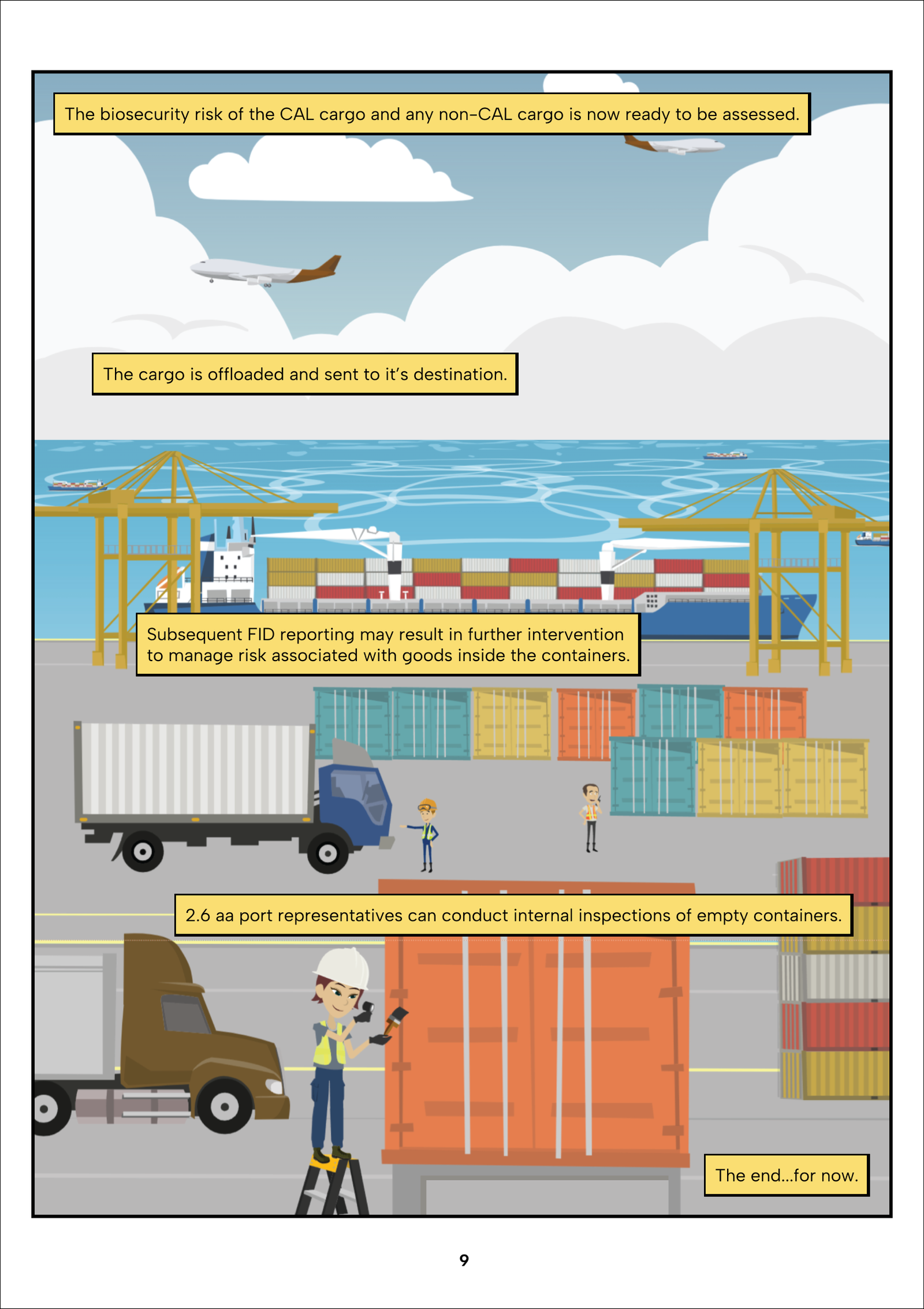
To address the lack of a cohesive product vision, I was tasked to create a storyboard to establish a shared understanding of the Containers project’s purpose and the tangible change it would bring to the day-to-day container import process. The storyboard served as a visual and narrative anchor for the project, grounding abstract concepts in a concrete, relatable depiction of how the end product would transform real workflows and interactions for those involved in the container import process.
The creation of the storyboard began with a series of stakeholder interviews to develop a deep understanding of the existing container import process, capturing the nuances, pain points, and key touchpoints that characterised the current experience. From there, personas were defined to represent the people most affected by the change, the key events along the process journey were mapped out, and a script was written to bring the narrative to life in a meaningful and accessible way. Original imagery was then created to complement the script, with Adobe Illustrator and Veyond used as the primary tools to produce the visual components. The finished storyboard was made available across the project, giving stakeholders and team members a shared reference point — a clear, human-centred picture of what the Containers project was working toward and why it mattered.