Department of Agriculture, Fisheries and Forestry
- PROJECT: Simplified Targeting and Enhanced Processing Systems (STEPS) Program
- DELIVERABLE: Interactive pattern
- PURPOSE: To help users complete a complex, sequential biosecurity assessment process for imported cargo more efficiently
- DESIGN APPROACH: Combined existing Agriculture Design System components into a reusable interaction pattern, validated it with users, and prepared it for governance review and adoption across delivery teams
- TOOLS: Figma
Background
The Simplified Targeting and Enhanced Processing Systems (STEPS) program is a 2024-2027 major initiative by the Australian Department of Agriculture, Fisheries and Forestry (DAFF) aimed at modernising cargo import processes. The program is a $145 million, 3-year project (2023–2026) designed to replace complex and inefficient manual systems with streamlined digital solutions.
Problem
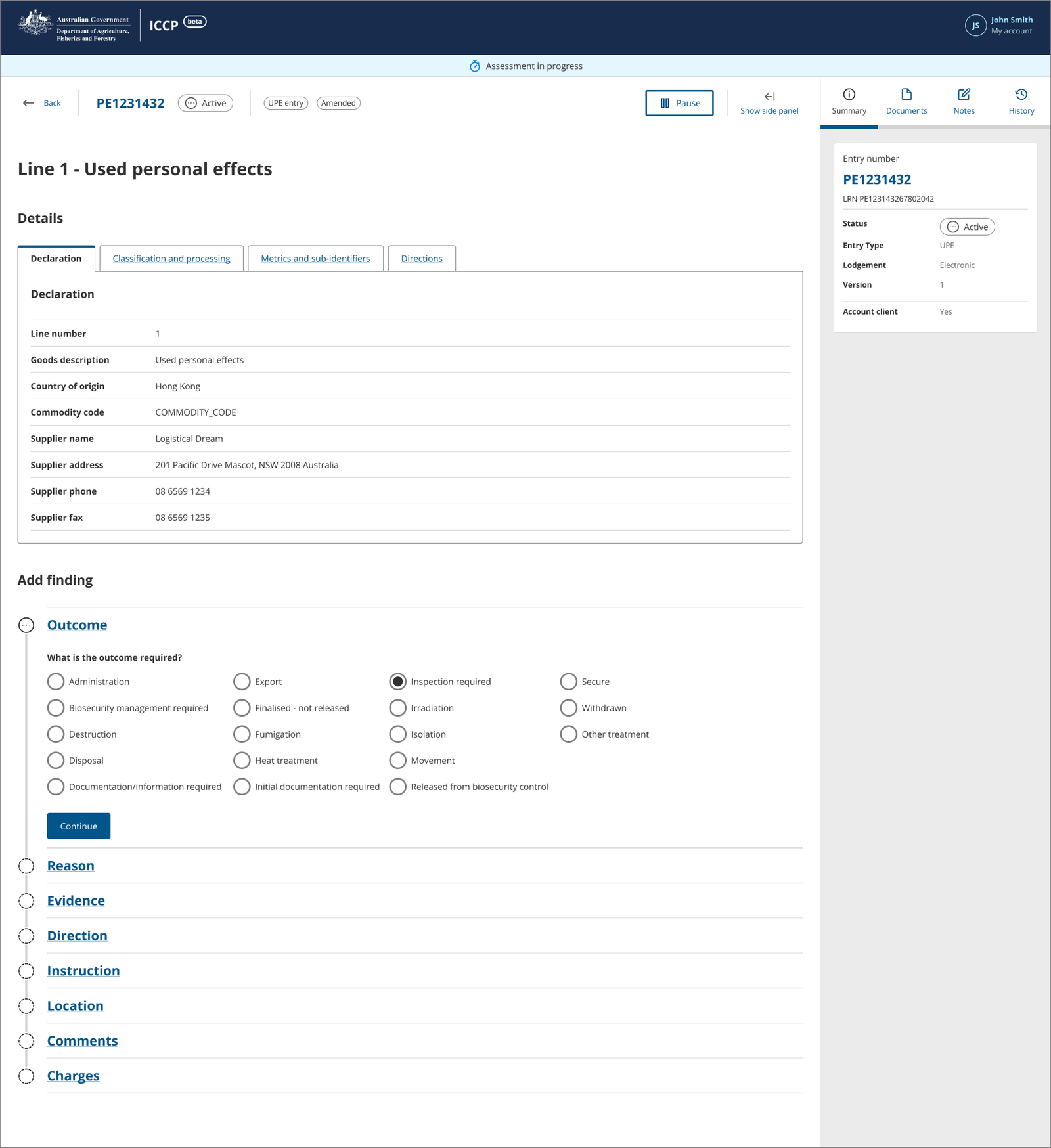
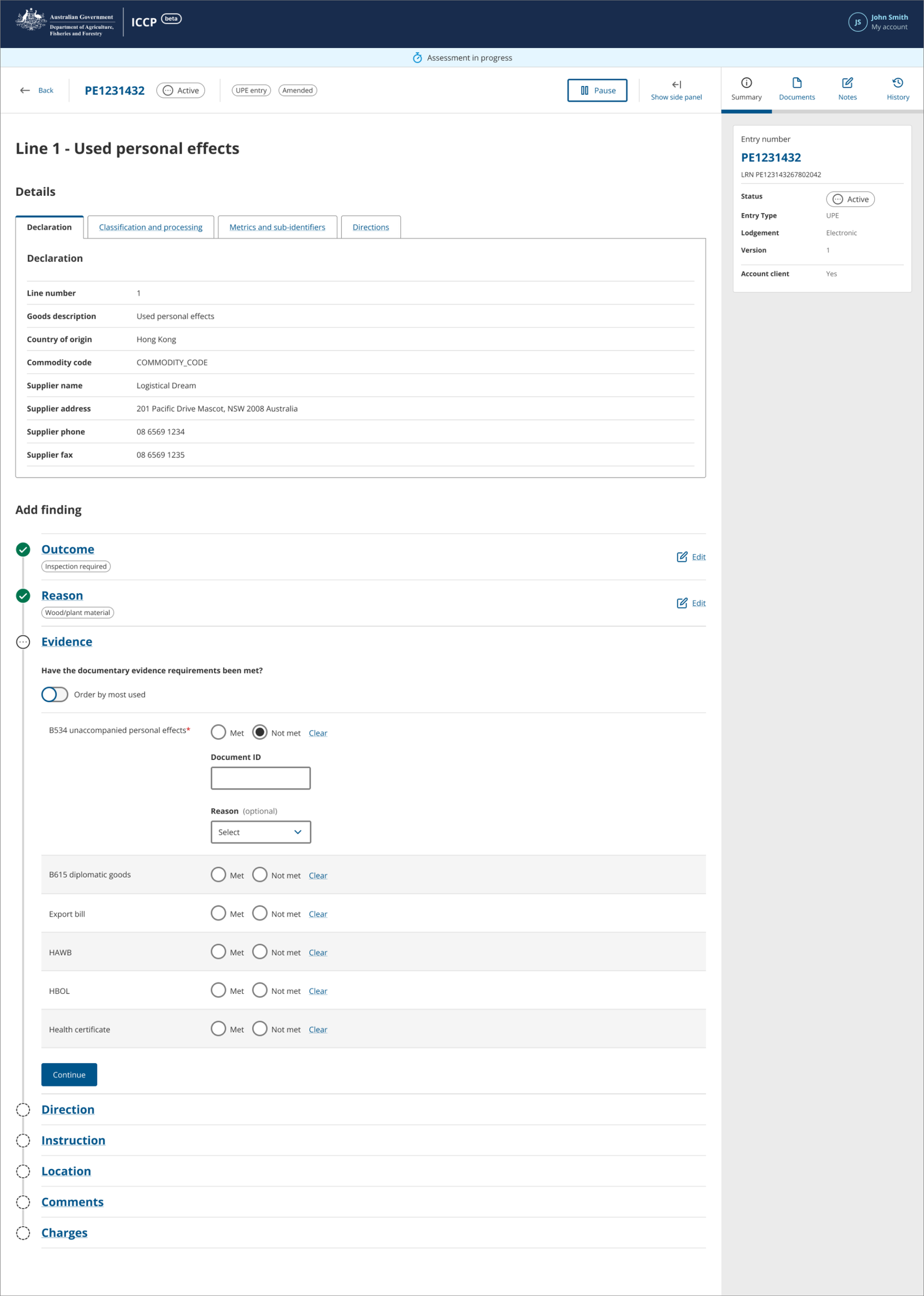
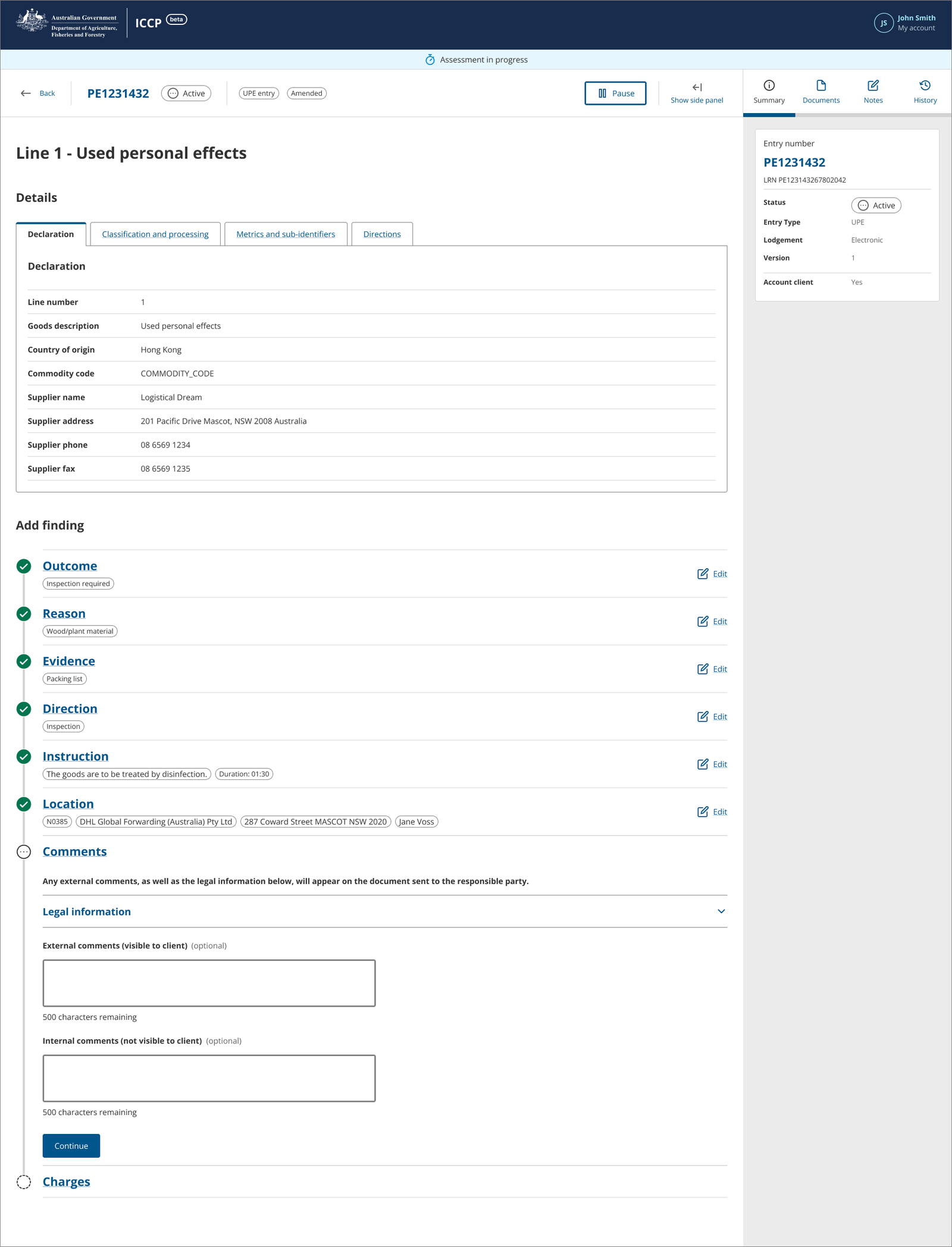
The Personal Effects workflow required an interaction pattern that could respond dynamically to user input and apply business rules to determine the next relevant question. The interface also needed to keep previous responses visible so users could review their progress without creating unnecessary screen clutter. The DAFF Design System did not include an existing pattern that supported this combination of progressive questioning, visible response history and rule-based workflow behaviour.
Solution
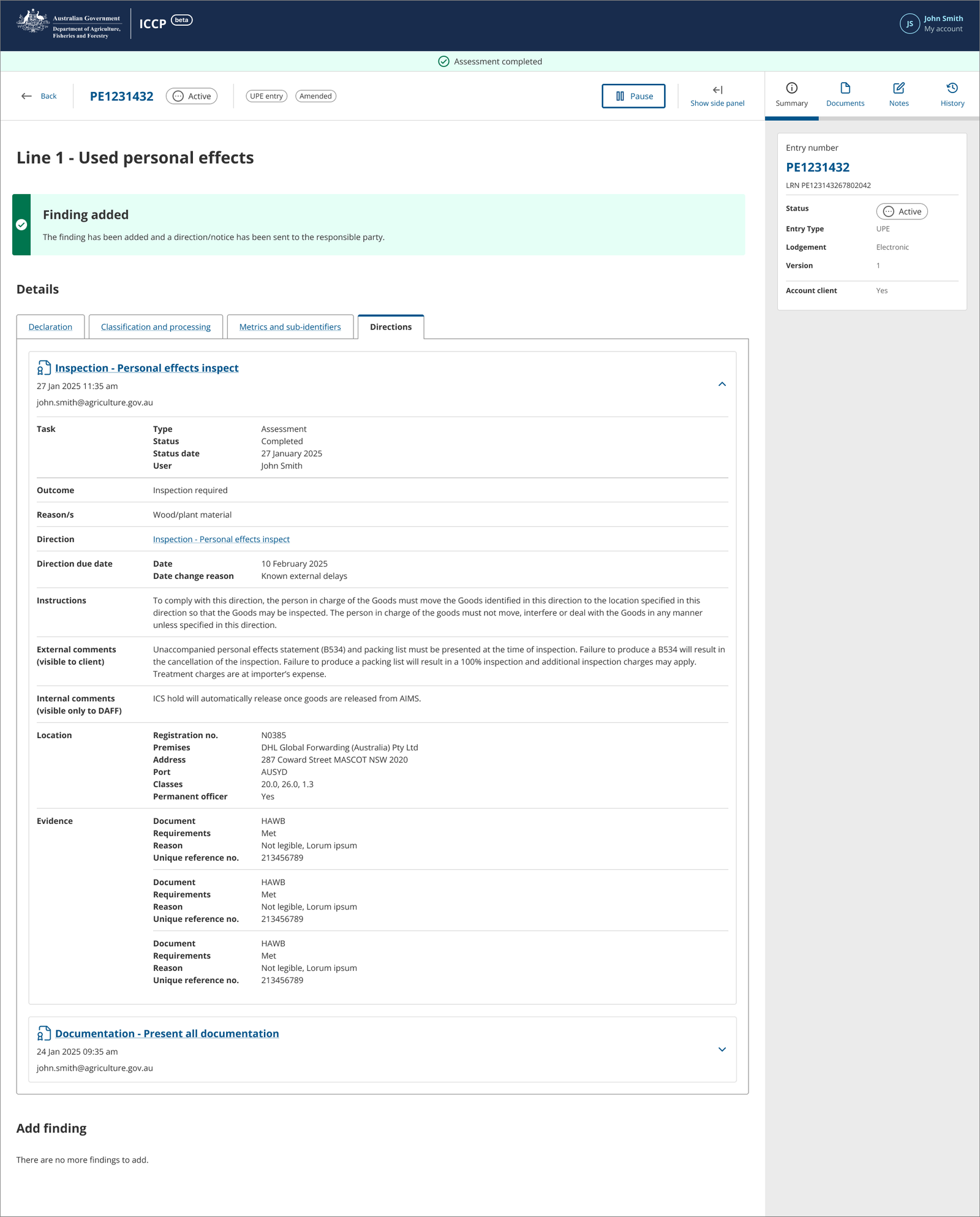
I first clarified the interaction requirements and reviewed existing DAFF Design System components for relevant visual and behavioural patterns. I then combined compatible elements into a custom interaction pattern and presented it to fellow UX designers for peer review during our weekly design meeting. After incorporating their feedback, I validated the pattern’s logic with the business analyst and applied it within a UI screen flow to demonstrate how it would work across the broader process. The complete flow was then validated with users and stakeholders, allowing the pattern and supporting screens to be refined in context.
Reflections
In the future, I would define clearer success measures such as task completion, error rates, comprehension, and user confidence to complement qualitative feedback. I would also document the pattern’s business rules, interaction states, accessibility requirements, and edge cases in greater detail to support consistent implementation and future reuse.